Blasting media compared
Why the blast media decides the result – from corundum to mild media for wood.
Read the guideOld paint layers, dark stains, a grey weathered film: with the right blast media and low pressure, healthy wood full of character emerges underneath – without chemicals and without days of sanding.
The process
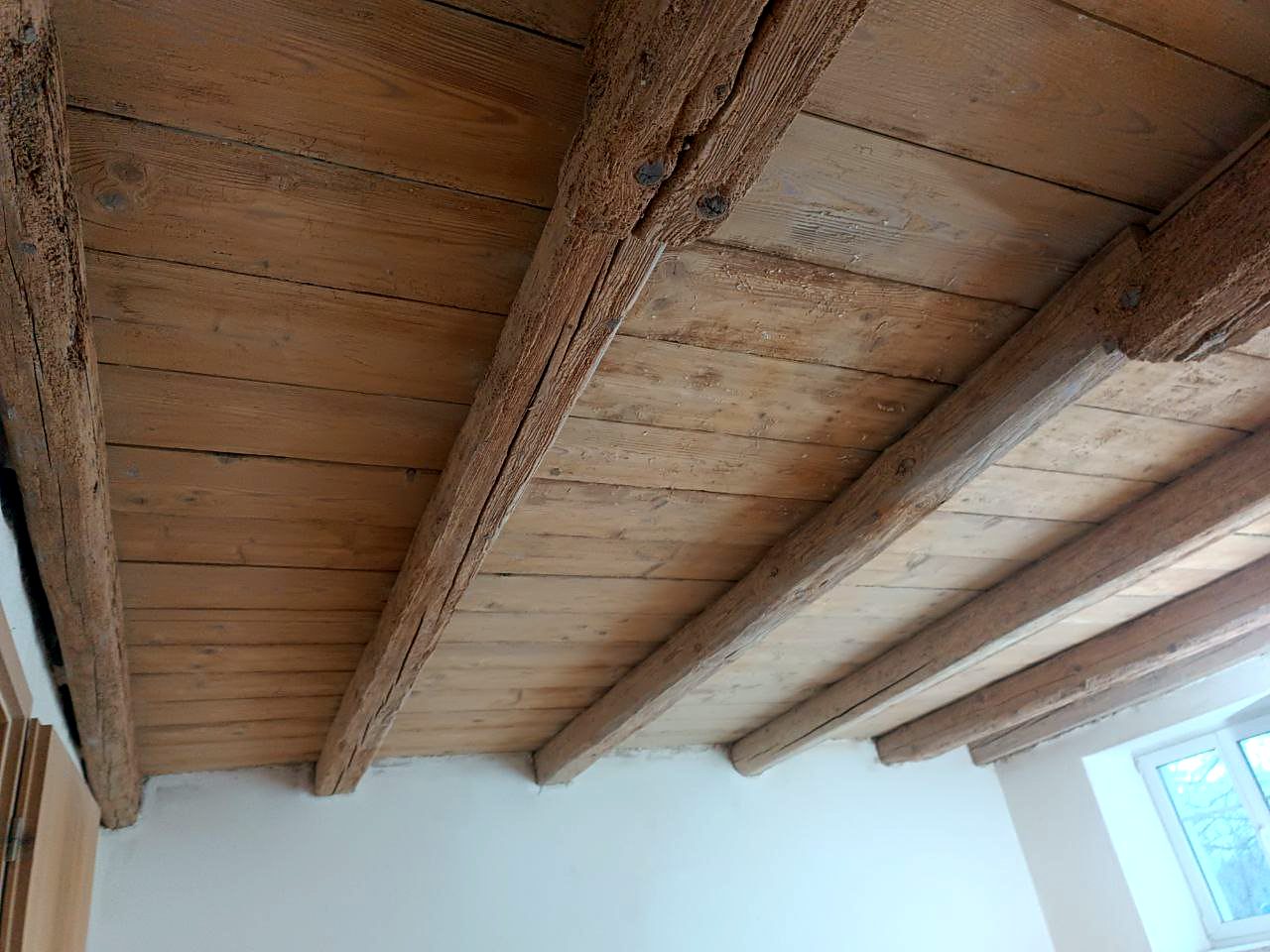
Sandblasting removes from wood what sanding only reaches with difficulty: paint and lacquer layers even in profiles and corners, dark stains, soot and dirt, and the grey, weathered surface layer. What remains is the healthy wood – with a lively surface on which the grain stands out to the touch.
Typical objects are old beamed ceilings and timber framing, staircases and banisters, doors, gates and shutters. Especially on intricate and carved parts, blasting is clearly superior to sanding because it reaches every contour.
The technique
Wood is a soft, grown material – so three parameters are decisive: a fine, mild blast media, considerably reduced pressure, and the right working technique of distance, angle and steady movement. That way only the coating is removed, not the substance.
One characteristic is worth knowing: in softwoods such as spruce or fir, the light earlywood rings are softer than the dark latewood rings. During blasting the soft zones are removed marginally more, so the annual rings stand out slightly. Many people value precisely this rustic, textured character; anyone who wants a perfectly smooth surface plans a fine sanding pass after blasting. Hardwoods such as oak, by contrast, remain largely even.
Afterwards
After blasting, the wood surface is clean and slightly roughened – an ideal base for the new treatment. Indoors, a light intermediate sanding on contact surfaces such as handrails is often enough; then follows an open-pored treatment with oil, wax or glaze that protects the wood and preserves its fresh tone.
When working in an occupied house, dust management is part of the job: we cover up, seal off work areas and clean after completion. Discuss with us in advance which rooms are affected – then we plan the protection and sequence accordingly.
A special case is timber framing on the weather side: exposed exterior beams absolutely need new weather protection after being stripped – a vapour-permeable glaze, for example, or a traditional coat of paint. We are happy to coordinate the blasting result with your painter or carpenter so the build-up works as a whole and the framing stays protected for the long term.
Frequently asked questions
Keep reading
Why the blast media decides the result – from corundum to mild media for wood.
Read the guideThe key cost factors honestly explained – and how to get a fixed quote quickly.
Read the guideOur service for wooden surfaces at a glance: from beamed ceilings to timber framing.
View serviceFree & no obligation
Beamed ceiling, staircase or timber framing: send us photos – we will advise you honestly and quote a fixed price.