Exposing brick walls
Gently remove plaster and paint, check the joints and protect the wall properly.
Read the guideLime plaster is breathable, moisture-regulating and durable – but only as good as its substrate. Old emulsion paints and synthetic resin renders prevent it from bonding. We blast the substrate clean so the plasterer can work on a firm, absorbent base.
The basics
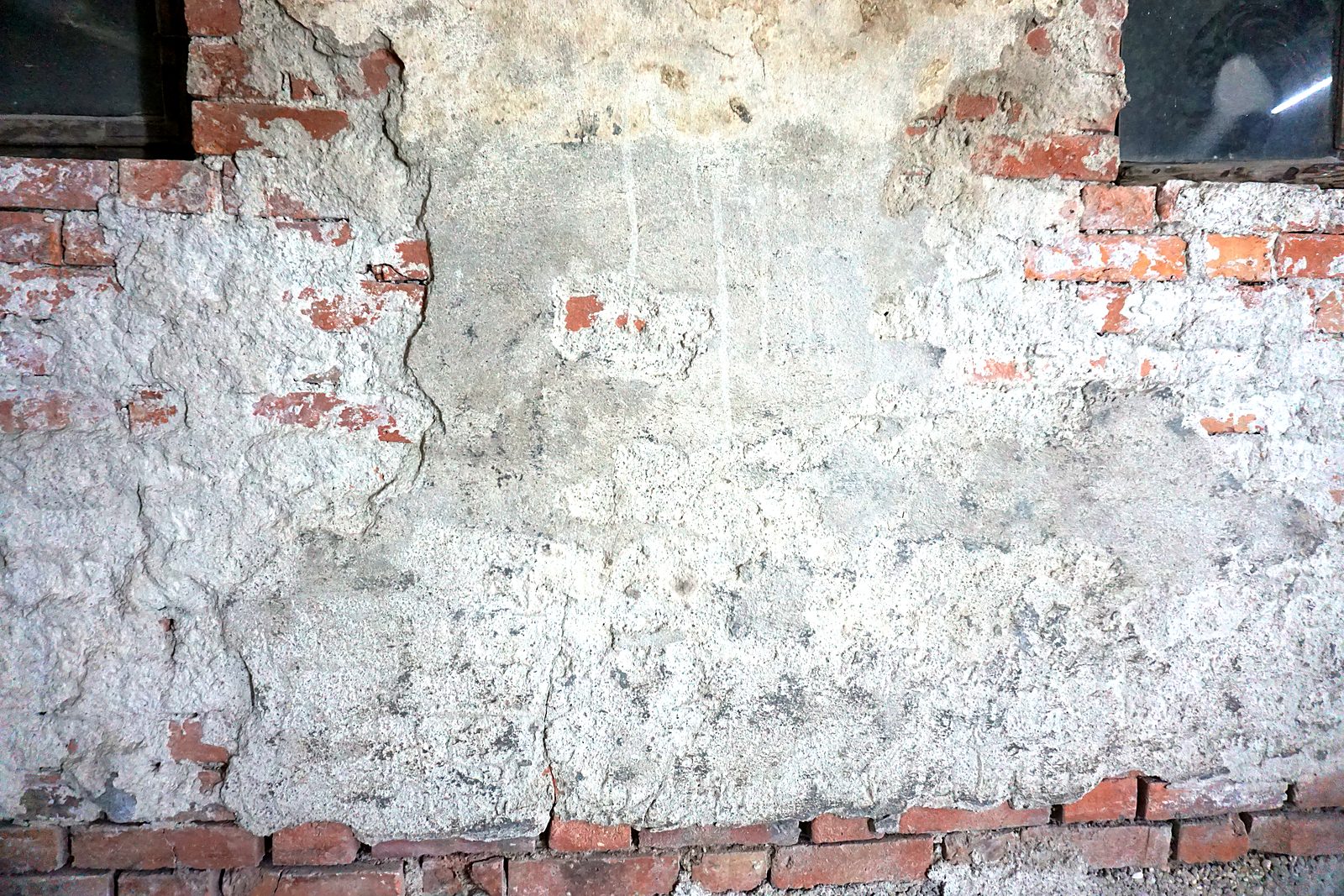
Lime plaster bonds minerally with the substrate: it needs a firm, sound, absorbent and clean surface without separating layers. Only then can it key in and last for decades. What disturbs this bond above all are dense, organically bound layers.
Typical problem cases are old emulsion and latex paints, synthetic resin renders, oil and gloss paints, adhesive residue from tiles or wallpaper, and loose, sandy layers of old plaster. Emulsion paints are deliberately low in absorbency – which is why they are no suitable base for new lime plaster.
Our work
When blasting, we remove paint, synthetic resin layers and loose material down to the sound base. At the same time the surface is roughened and the pores are opened – exactly what the new plaster needs for good adhesion. Whether a firm, mineral old plaster can stay or has to come off completely, we check beforehand together with you or the plasterer.
We choose the blasting medium and pressure to suit the masonry: brick, natural stone, rubble stone or mixed masonry react differently. Afterwards the surface is thoroughly cleared of dust and blasting residue so the plasterer can carry on straight away.
Honestly
Where masonry is damp or salts bloom, a clean substrate alone is not enough. The cause – rising damp, splash water, leaking connections – should be clarified before replastering. With heavily salt-laden masonry, plasterers often work with a sacrificial plaster that absorbs salts and is then removed again; planning and execution belong in the hands of the specialist contractor.
Our contribution is a clean start: we remove what prevents adhesion and reveal the true condition of the masonry. That makes it easier for everyone involved to decide how to proceed.
For contractors
You plaster, we blast beforehand: we are happy to work with plastering, stucco and painting contractors who need a clean, sound substrate without keeping blasting equipment themselves. We come with our own mobile unit, schedule the job around your construction timeline and hand over the surface swept clean and ready.
That way your crew stays with its craft, and the client gets a substrate on which the lime plaster holds permanently. Get in touch early so that blasting and plastering can follow each other smoothly.
Frequently asked questions
Keep reading
Gently remove plaster and paint, check the joints and protect the wall properly.
Read the guideWhen the method suits render, clinker brick and natural stone – and where caution is needed.
Read the guideMineral media, glass beads, corundum and more – properties, selection and environmental aspects.
Read the guideFree & no obligation
Send us photos of the wall and tell us which plaster will follow – we tell you what has to come off first and give you a firm quote.