Substrate for lime plaster
What the substrate must look like so that new lime plaster holds permanently.
Read the guideAn exposed brick wall adds character to period homes, lofts and vaulted cellars. To keep the wish from turning into trouble, the right order matters: plaster off, residue gently blasted, joints checked, surface protected.
Check first
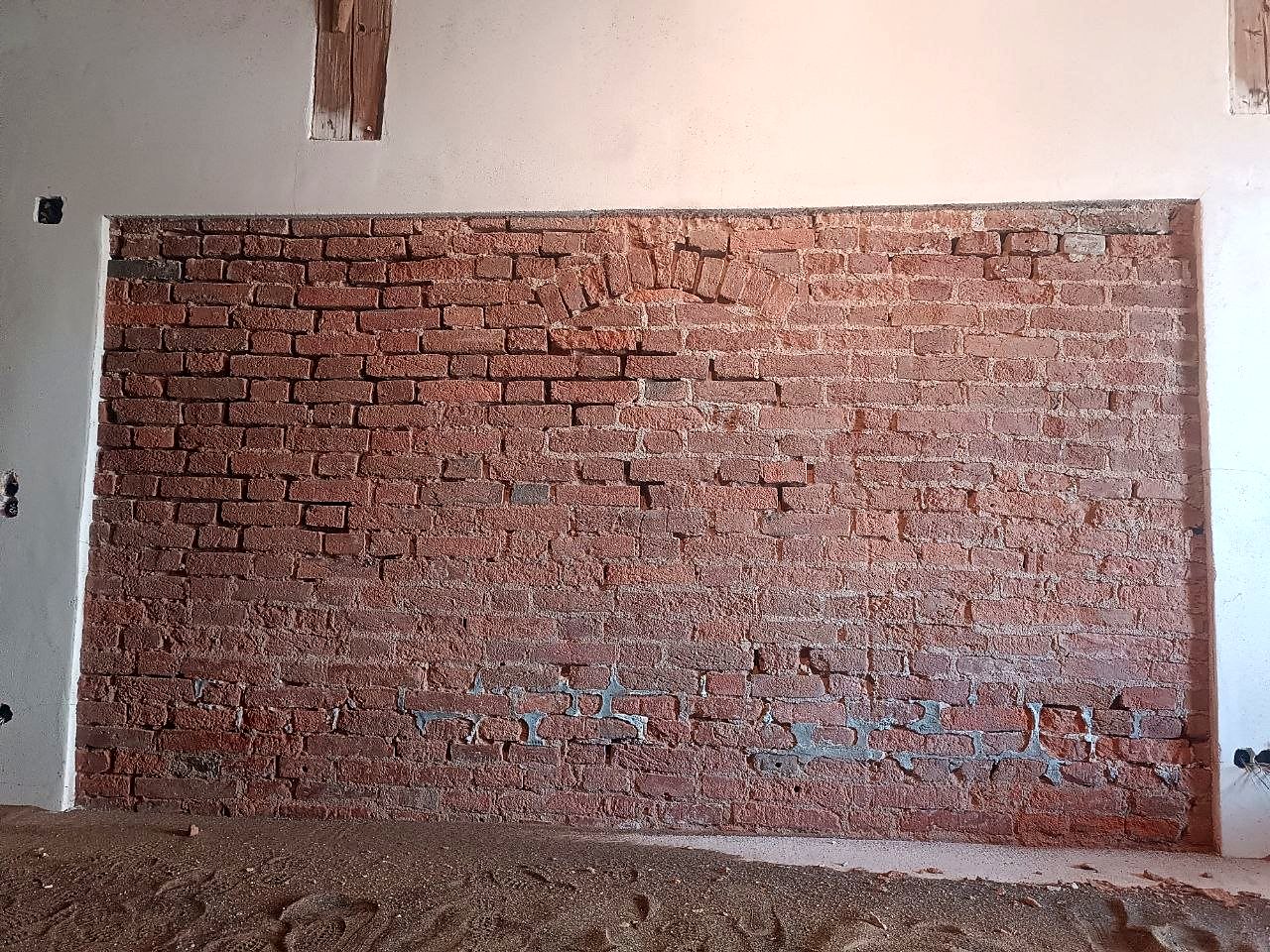
You never know exactly what is under the plaster. Many walls in old buildings are made of beautiful, even brickwork – others of mixed masonry with rubble stone, later infills or repairs in grey cement mortar. Such spots remain visible after exposing, as can be clearly seen at the bottom of the wall in the picture.
Our tip: open a hand-sized window in the plaster at two or three spots beforehand. That way you see the bricks, joints and condition before the whole wall is opened. We are happy to help assess it from your photos.
The process
Thick old plaster is first knocked off mechanically – rough but fast work, done by you, a plasterer or a demolition contractor, depending on what is agreed. What remains is plaster residue in joints and pores, lime haze and often old paint. This is where we come in: with a fine, mild blasting medium and adjusted pressure we remove these residues from the surface without attacking the bricks unnecessarily.
Old handmade bricks are often much softer than modern ones. That is why we work out the medium and pressure on a test spot until the residue comes off cleanly and the fired skin of the brick is preserved. Depending on your wish, the result is a fresh, clean look or a deliberately more rustic appearance with patina.
Joints & moisture
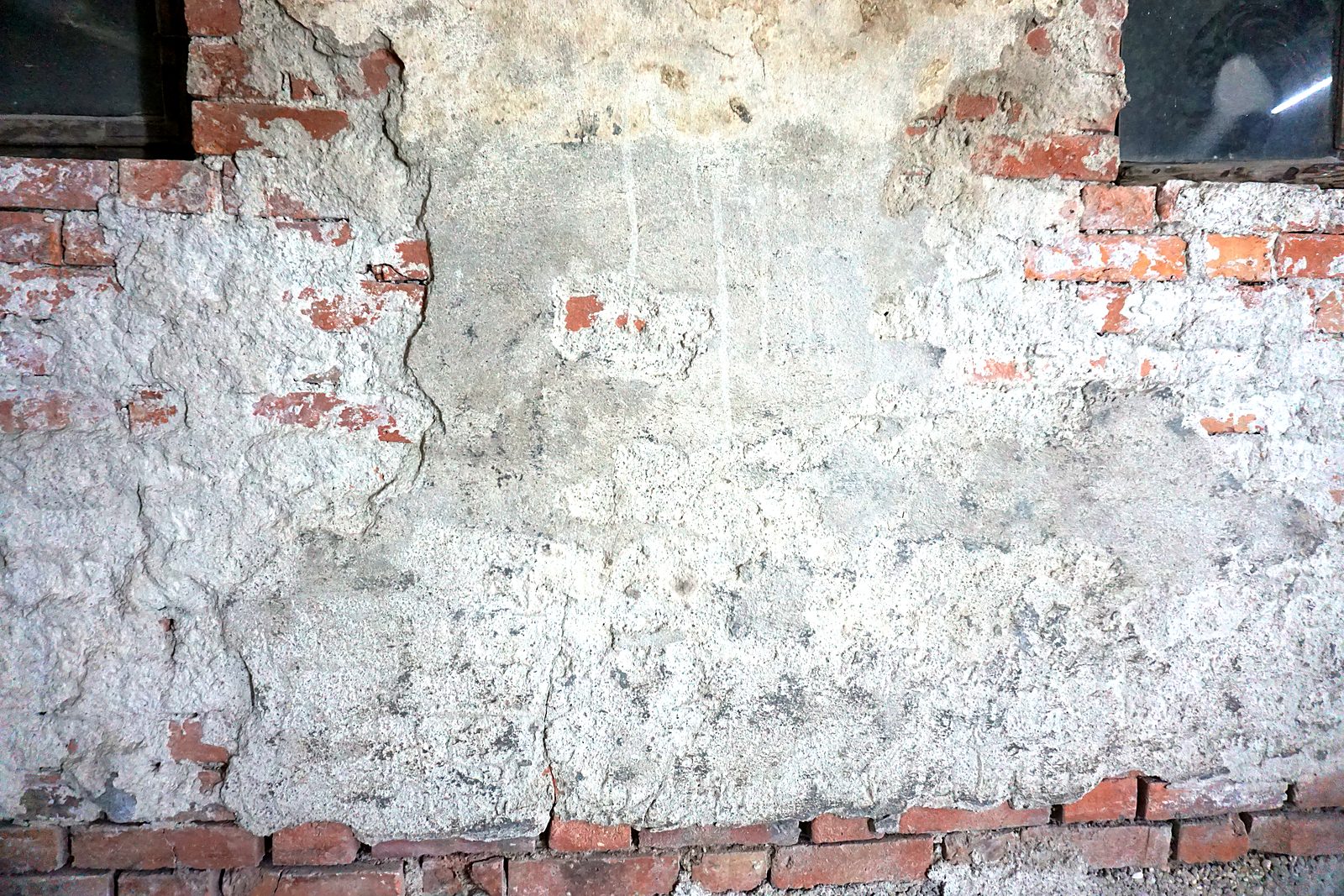
Exposing the wall also reveals the condition of the joints. Old lime mortar is often crumbly and sandy; washed-out or crumbling joints should then be raked out and repointed – ideally with lime mortar to match the existing wall. A bricklayer or plasterer takes care of this; we coordinate so that repointing can follow directly.
Also watch out for moisture and salts: white efflorescence points to rising or penetrating damp. Especially on exterior walls and in cellars the cause should be clarified before the wall stays open permanently – otherwise it will bloom again after a short time.
Finally
A freshly blasted brick wall may still shed a little dust. A clear, vapour-permeable consolidant or impregnation binds the fine dust, makes cleaning easier and keeps the natural look – what matters is that the wall can still breathe. Glossy varnishes or tight sealants are unsuitable for old masonry.
Indoors it is worth looking at the whole picture: removing the plaster removes a layer that used to even out irregularities and hide cables. Plan sockets, switches and cable routes with your electrician before exposing the wall.
Frequently asked questions
Keep reading
What the substrate must look like so that new lime plaster holds permanently.
Read the guideWhen the method suits render, clinker brick and natural stone – and where caution is needed.
Read the guideSelected projects – including exposed masonry, timber framing and beamed ceilings.
View referencesFree & no obligation
Send us photos of your wall – ideally with a small test window in the plaster. We tell you honestly what is possible and give you a firm quote.