Metal rust removal
Remove rust completely, understand Sa preparation grades and build up corrosion protection properly.
Read the guideDeposits cost heat, sulphur eats concrete and steel: professional blast-cleaning of fermenters and tanks is work we plan carefully – scheduled in the maintenance window, so the downtime stays short.
The problem
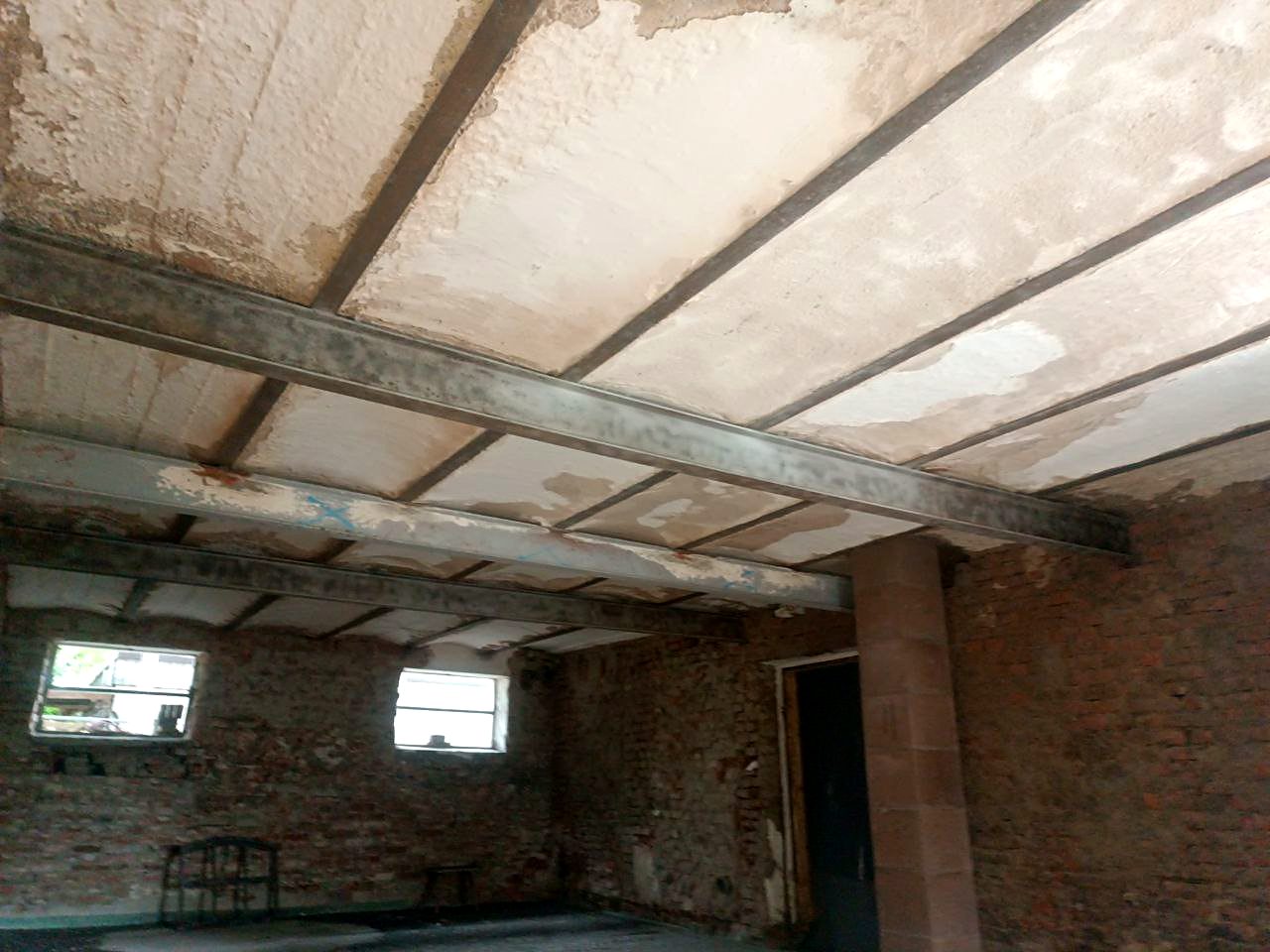
Over the years, stubborn layers build up in the fermenter of a biogas plant: organic residues and sediment, plus sulphur and lime compounds on walls, agitators and heating pipes. On the heating lines these deposits act like an insulating layer – heat transfer drops, and the plant needs more energy to hold the process temperature.
The second effect is even more expensive: hydrogen sulphide gives rise to aggressive sulphur compounds in the gas space that literally eat away at concrete and steel. Removing the deposits regularly and renewing the corrosion protection extends the service life of the structure considerably – and spares you unplanned, costly repairs.
Our work
We blast everything that carries deposits and needs to work cleanly again: concrete walls and ceilings in the fermenter, especially the corrosion-prone surfaces in the gas space, plus steel components, agitators, heating pipes, internals and tanks. We bring the blasting equipment and compressor with us – the work happens directly in and on your plant.
Blasting not only removes the deposits, it also creates the clean, sound substrate for a new protective coating. Its selection and application are coordinated with you and the coating contractor, so the build-up works as a whole.
How you know it is time: the heating performance in the fermenter drops noticeably even though more energy is being used; corrosion marks or flaking coatings appear on accessible components; or the last thorough cleaning is simply many years ago. At the latest then, a survey pays off – ideally together with us during a walk-through.
Organisation
Every day of downtime costs feed-in revenue. That is why we place the work in your regularly scheduled maintenance window: date and sequence are agreed precisely in advance, we work swiftly and, where possible, in parallel with other trades, so the plant can restart as soon as possible.
Safety follows clear rules: blasting only begins in an emptied, cleaned tank that has been measured gas-free – the gas clearance measurement and release are carried out by the operator or the qualified person responsible. The exact sequence, responsibilities and interfaces are set down in writing before work starts.
Frequently asked questions
Keep reading
Remove rust completely, understand Sa preparation grades and build up corrosion protection properly.
Read the guideThe key cost factors honestly explained – and how to get a fixed quote quickly.
Read the guideOur core process at a glance: equipment, workflow and applications at Sandblitz.
View serviceFree & no obligation
Talk to us early – we will schedule the blast-cleaning of your plant precisely into the shutdown.